
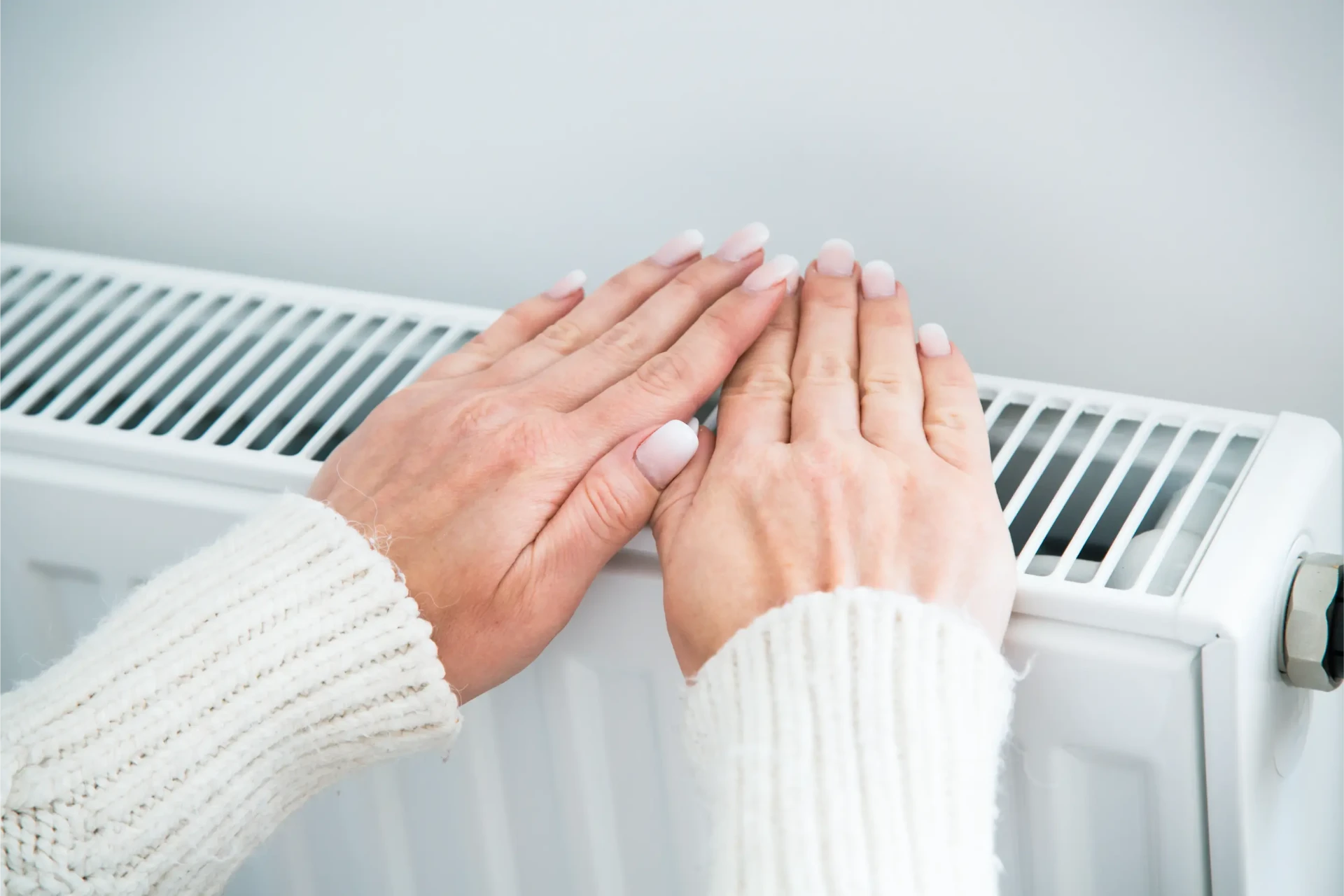
When the house is cold and the taps will not warm up, it is tempting to keep pressing reset. A better starting point is to record exactly what has stopped. Does the boiler display still have power? Do radiators warm but the shower stay cold? Is only one tap affected? These observations help separate a boiler shutdown from a control, circulation or outlet problem. Keep checks to the user controls and visible equipment: opening the appliance is not part of a household troubleshooting routine.
Check safety before checking settings
If you smell gas, hear a carbon monoxide alarm or suspect fumes, do not try to restart the boiler. Leave the home and call the National Gas Emergency Service on 0800 111 999 from outside. Do not use electrical switches or flames. Anyone feeling unwell needs urgent medical advice. A suspected gas problem is different from an ordinary loss of heating and should not wait for a contact-form response.
Confirm the thermostat is asking for heat
Read the room thermostat and check its schedule, temperature setting and any holiday mode. If it uses batteries, check the display and follow its battery instructions. A programmer set to summer mode or the wrong time after a power cut can make a working boiler appear unresponsive. Make a simple heating demand using the normal controls and observe what the boiler does. Do not open a wired thermostat or bridge connections to test it.
Smart controls can also lose their connection or power. Use the instructions for the control fitted in your home, not a sequence intended for another brand. Note any message on the controller as well as the boiler code. If the boiler works for hot water but never responds to a heating request, that pattern is useful information for our central heating repairs team.
Look at power and the display
Check whether the boiler is switched on at its normal user control and whether the display is lit. If other circuits have lost power too, the issue may involve the household supply. Do not keep resetting a breaker that trips again, replace electrical components or remove a fused-spur cover. An appliance or circuit that repeatedly trips needs investigation. Photograph or write down any fault code before changing a setting, because that information can be lost after restarting.
Read water pressure without guessing at valves
For a sealed heating system, look at the pressure gauge or digital reading and compare it with the cold operating range in the model's manual. Low pressure can stop some boilers, but the correct filling arrangement differs between appliances. Only carry out a top-up if the user instructions allow it and you can identify the controls confidently. Do not open an unidentified valve, overfill the circuit or remove the casing to find a filling point.
Pressure that keeps falling after a top-up is a symptom needing a cause, not a weekly maintenance task. Look for visible damp around accessible radiator valves without loosening connections. A photograph and a note of the cold pressure help the engineer. If the gauge looks normal but the boiler reports low pressure, leave sensor testing to a professional rather than adding more water just to clear the display.
Consider cold weather and the type of system
After a frost, an exposed condensate drain is one possible cause of a shutdown. Our safe frozen condensate guide explains the limits of a ground-level check. Do not thaw unknown pipework. A combi supplies hot water directly; a boiler with a cylinder uses separate stored-water controls. Tell us which arrangement you have, since heating working with no stored hot water suggests a different investigation from a completely inactive combi.
Keep warm without creating another risk
Use extra layers and blankets and close doors to rooms you are not using. If using an electric heater, follow its safety instructions, keep it away from fabrics and do not leave it unattended. Never use an oven, gas hob, barbecue or outdoor heater to warm the home. For a rented property, notify the landlord or housing provider responsible for repairs and tell them if a vulnerable person is affected.
What to tell us when you call
Give your Newcastle postcode, boiler make and model, exact code, pressure reading and whether hot water or heating still works. We prioritise homes without heating or hot water, but confirm availability rather than promise an arrival time. Opening hours are Monday to Saturday, 8:00am to 7:00pm. Our boiler repairs begin at £85 for call out, diagnosis and first-hour labour, with parts and further work agreed separately. Review our prices or send the fault details to arrange the next step.
Written by the engineers at Newcastle Boiler Maintenance Ltd, Gas Safe registered heating engineers in Newcastle upon Tyne.